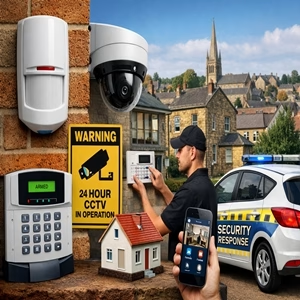
Burglar Alarms Harrogate
| # |
Firm Name |
Address |
Phone |
Website |
| 15 |
K9 Patrol Ltd |
Unit 105-107 Monkswell House, Manse Lane, Knaresborough HG5 8NQ |
01423 551526 |
https://k9patrol.co.uk |
1. Lock All Doors and Windows 🔐
- Even if you’re stepping out for just a moment, ensure all doors and windows are securely locked.
- Burglars often target homes with easy access. It only takes seconds for them to break in, but the emotional impact can last a lifetime.
2. Use Timer Switches ⏱
- Set indoor lights or a radio to turn on automatically when you’re not home.
- This creates the impression that someone is in, discouraging potential intruders.
3. Hide Valuables 🎁
- Keep presents and high-value items out of sight, particularly from windows.
- Avoid giving thieves a reason to target your home.
4. Secure Outdoor Spaces 🛠
- Lock sheds, garages, and gates securely.
- Store tools, ladders, and any equipment that could aid a break-in out of reach or inside locked storage.
5. Be Strategic with Recycling 🗑
- Only place rubbish out for collection on the scheduled day.
- Turn gift boxes inside out before discarding them to avoid advertising new and valuable purchases to opportunistic thieves.
6. Install Outdoor Lighting and CCTV 💡
- Motion-activated lights and CCTV cameras are effective deterrents.
- They make your property less appealing to burglars by increasing the risk of detection.
7. Don’t Advertise Your Absence 🏝
- Resist the urge to post holiday photos on social media until you return.
- Letting everyone know you’re away can inadvertently invite trouble.
8. Mark Your Property 🖊
- Use UV pens or property marking kits to make your valuables traceable.
- Register your items on free national databases like Immobilise.com to improve the chances of recovering them if stolen.
If You See Anything Suspicious 🕵️♂️
Report it to North Yorkshire Police:
- Call 101 for non-urgent matters.
- Dial 999 in an emergency.
……………………………………………………………….
Burglar Alarms Harrogate
A burglar alarm system consists of a series of electrical components that are connected to a property. Via sensors and contacts, they detect movement or the opening of doors and windows, upon which a loud alarm is produced to alert those nearby of the unauthorised entry.
Burglar alarms have become standard equipment in stores and other businesses, and they’re becoming increasingly common in private homes as well. If you’ve ever shopped for a home security system, then you know there are a wide variety of options available. These systems range from do-it-yourself kits you can pick up for a small prie to sophisticated whole-house security networks that must be installed by professionals. But, as it turns out, most alarm systems are actually built around the same basic design concepts.
Other than the family dog, the most basic burglar alarm is a simple electric circuit built into an entry way. In any circuit, whether it’s powering a flashlight or a computer, electricity only flows when you give it a path between two points of opposite charge. To turn the electricity on or off, you open or close part of the circuit.
To open or close a flashlight circuit, you simply throw a switch. In a burglar alarm, the switch detects the act of intrusion — opening a door or window, for example. These sorts of alarms are divided into two categories:
In a closed-circuit system, the electric circuit is closed when the door is shut. This means that as long as the door is closed, electricity can flow from one end of the circuit to the other. But if somebody opens the door, the circuit is opened, and electricity can’t flow. This triggers an alarm.
In an open-circuit system, opening the door closes the circuit, so electricity begins to flow. In this system, the alarm is triggered when the circuit is completed.